
Let’s Do The Twist…
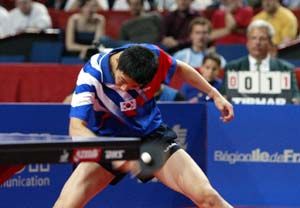
Photo by: Mariann Domonkos, courtesy www.ittf.com
In this article I am going to discuss how to twiddle. Sounds a bit strange I know, but if you are going to be an effective player with the long pimples that you have chosen, then there are certain things about twiddling that you will need to know and do to reach your full potential. So sit down, grab a cup of coffee, and settle in to read all about the ancient art of twiddling.
What is Twiddling?
Twiddling refers to the practice of turning your bat around in your hand whilst playing table tennis, in order to change which side of the bat hits the ball. It is usually done by players who have rackets with very different sides (combination bats), in order to increase the variety of shots that can be made, and to increase the chances of an opponent making a mistake. It can also be done by players that have rackets with the same rubber on both sides, or with similar rubbers, but this does not happen often as it usually isn’t worth the effort.
The usual twiddle is done by using the wrist and bottom three fingers of the bat hand to spin the bat around via the handle (generally anti-clockwise for a right hander, clockwise for a left hander), while the thumb and index finger get out of the way and then come back into position for the next shot. The handle of the bat should not leave the hand at any time, although the grip will have to loosen if the bat is going to turn. Experienced players will sometimes twiddle more than once to make it harder for the opponent to keep track of which side is being used.
Why Do You Twiddle?
Twiddling is done for a number of reasons, the main ones being:
- To provide a wider variety of possible shots by being able to use different surfaces at different times on the player’s forehand and backhand.
- To increase the chances of an opponent making a mistake, by:
- affecting the opponent’s timing and rhythm because of the extra variation in spin and speed between the two different racket surfaces;
- using an racket surface (such as anti-spin or long pimples) that is less familiar or understood by the opponent, whilst also having a normal side that can be used for the player’s own attacks;
- making the opponent guess incorrectly about which side of the bat has been used to hit the ball; and
- frustrating the opponent and making him play more carelessly.
- To provide the person who twiddles with a ‘safe’ side that can be used to safely handle powerful attacks by his opponent, and a normal side that can be used to make attacks of his own when the chance arises. Sometimes the ‘safe’ side is also used to set up the players attacks with his normal rubber.
- To keep an opponent ‘on his toes’ and force him to be watching all the time for which rubber has been used, which can be mentally tiring and can distract an opponent from concentrating about other important aspects of the game.
General Tips For Twiddling
Tip 1 – Know Which Side is Where (Also Known As ‘Don’t Confuse Yourself More than Your Opponent’)
In order to twiddle successfully, you must always be keeping mental track of what side your long pimples is currently on, or else you will only have a 50% chance of playing the correct shot – not the odds you are looking for! You should never have to look at your bat to confirm which side is where, as you should be able to tell by the feel of the rubber on your index finger. Good twiddlers don’t even need this cue – they are always mentally keeping track of which side is on the forehand and backhand. Having been a twiddler myself for most of the last 10 years I can confirm this, although I do have the habit of feeling the rubber with my index finger just before serving or returning serve to avoid any embarrassing mistakes.
Tip 2 – Practice, Practice, Practice
While you are learning to twiddle, carry your bat around with you whenever you can, such as at home or where you play table tennis. Constantly twiddle the bat, while keeping part of your mind focused on which side is on the forehand and which side is on the backhand. Check every now and again to make sure you are correct.
A few months of this type of practice will make keeping track of which side is where automatic during your matches – and trust me, you will want your mind to be free to think about other things.
Keep practicing the twiddle during your training and games as well. Don’t offend your training partners when you are blocking for them etc, but make sure that you are including drills in your training where twiddling is required. Try playing the occasional game or drill where you must use the normal side of your bat all the time – it will improve your twiddling in a hurry!
Tip 3 – Be Patient
Some people put a sheet of long pimples on their bat and expect to be an expert at twiddling right away. After all, how hard can it be? Rest assured that it will take more than a month or two to successfully use twiddling as part of your game. The actual skill of turning the bat should only take a month or so, but the skill of knowing when to turn the bat will take much longer. Expect to be caught out using the wrong side or playing the wrong shot with the right side frequently in the first three to six months. After that you will start to get the feel for the right time to twiddle for your own style.
Conclusion
Now you know about the secrets how to twiddle with long pimples, read on to learn about the tactics that you can use with long pimples and twiddling to get the most out of your table tennis style.
Next: General Tactics for Playing With Long Pimples
